Monday, 28 July 2014

20 YEARS AFTER A REVOLUTION IN WHICH THE 'REVOLUTIONARIES' SHOT THEMSELVES IN THE FEET

Karlskrona, Sweden -- On the 22nd of July 2014, our country - The Gambia - marks 20 years since our rights and freedom were stolen from us by the consequence of what political animals will call a 'revolution'. A revolution indeed, hence the current status quo!

Twenty years down the line, we are still grappling with the meaning and significances of this revolution, which was supposedly meant to end timocracy, crony capitalism and political corruption.
It's obvious that the ultimate purpose of a revolution is to empower the masses and create a new society. However, the euphoria with which the July 22nd revolution was welcomed, has turned to a battery of disillusions: the revolutionaries shot each other's feet, leading to incarceration of the lucky ones (Sana Sabally etc), summary execution of the hapless ones ((Abdoulie Dot Faal etc), exile of the wise ones (Alhagie Cham Joof - Sir Jackal etc), and ultimately plunging the country into more or less a powerful fiefdom within the political spectrum, akin to Machiavellianism.

Consequently, this is the recipe for a failed revolution; and these events went on to serve as preludes to our suffering as a nation and further helped construct an insane system in which every Gambian becomes a potential political victim (because Jammeh's whip spares no one, even those who grease the wheels and keep the spares apart - Njogu Bah, Momodou Sabally, Benedict Jammeh etc).

Understanding that one of the most important motives of a revolution is that the revolutionaries have become wary of the existing status quo, the July 22nd revolution could have been an anatomy of a successful one, given the nature of political nomadism during Jawara's thirty-year rule: a section of the working class was marginalized and obviously influenced both by the bureaucracy left over from the Jawara's era and their de-politicization.

In other words, president Jammeh had had the opportunity to not only make a combination of prowess and firm leadership through democratizing the country, but also a revolutionary inspiration to the world and a hero to the proletariats. But, as the saying goes: 'power corrupts and absolute power corrupts absolutely.' So is the outcome in the case of our country.

Few years after he came to power, Jammeh succeeded in eliminating his enemies (so-called counter-revolutionaries), silencing his subjects and instituting a kind of a pseudo-socialist system (because he has bakeries, he sells sand, he sells rice, he sells meat, the list goes on) that cripples the private sector so much that the government becomes the main source of employment.
What happens next? This system turns citizens into political clients and intellectual prostitutes. And in the process of becoming clients of the state, we have been robbed of our customer rights. This is how the door becomes opened for Jammeh to view democracy but as a charade, to rob us of our wallets, and freedom.

I hold that it's a baloney to talk about July 22nd revolution in abstract, without asking 'July 22nd revolution for whose benefit'. It's a common knowledge that every country whose people have been politically and socially subjugated, needs a revolution. Not just a mere pseudo-revolution in the case of our country, but a revolution for the working class, a revolution that will eventually breed social and economic independence and introduce a representative democracy. Former Captain Yahya Jammeh

During a short stop at the Kastrups airport in Copenhagen, Denmark, I met a demographically young Gambian who came from an agrarian family, looking desperately for an answer to a question he posed me: "... I am not a politician, but when shall we be free", he asked, as if I am one. Well!! I am not a politician too, but the answer to your question is: 'whenever your father, back in your village is able to walk to the URR governor's office with a placard that reads 'where does my tax money go', I logically replied. He bid me farewell and disappeared in the crowd.

The thought that I am a utopian communist must had been pulling strings in his heart. However, his demand for a quick-fix answer to our national problems clearly exhibits how desperate Gambians are for a new revolution that will replace bellicose nationalist Jammeh and usher in a new government that will enable the popular masses to exercise their political rights as masters of state and society, and free them from all kinds of social bondages. This is not utopianism, but a reality that can be achieved.
Yahya was a closed friend to the late Libyan leader, Muammar Gaddafi, until few months before he was ousted then Jammeh denounced him

The question always arise: 'How do we do this'? The answers can be very broad and therefore eludes my little political knowledge. However, I won't hesitate to state that educating the masses, building strong organizations and harnessing our efforts are key components to start with. It's important to note that the revolutionary overthrow of a government or the democratically changing of a tyrant government is but a baptism of fire.

whilst we are creating a strong network, it is very prudent to avoid the crab mentality: if you put many crabs in a bucket and one of them happens to find the way out and embarks on crawling its way out of the bucket, the ones remaining inside will try to pull the crawling crab back. This action sets back the progress of our common struggle as a people.
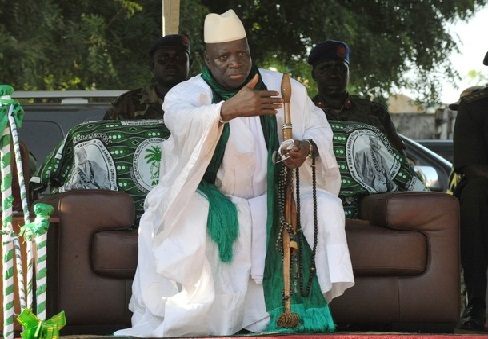
Jammeh is one of Africa's longest-serving head-of-states

However, I do have an involuntary commiseration for those who think the July 22nd revolution is worth celebrating. This day should instead serve as a food for thought, not only for the people whose freedom were stolen, but the people who stole the freedom.

I suggest president Jammeh looks for a very quiet place and sits there for few hours alone and reflects on whether it's worth it for a president to be in the helm of the government for 20 years and not creates a room for himself to remain in his own country after he is no more in power.

Mr. President, make your bed soft because you will lie down on it one day. In the meantime, happy 'July 22nd' to you!!

Friday, 18 April 2014

SSU FORTSÄTTER UTMANA UNGDOMAR ATT VARA AGENTER FÖR FÖRÄNDRING


Under de första dagarna på påsklovet samlade Socialdemokraternas ungdomsförbundet (Ssu) ihop ett trettiotal ungdomar på Bräkne-Hobys folkhögskola för en utbildning som bland annat gällde politik, samhälle och kommunikationsfrågor. Utbildningen, som kallas Ssu3, hölls mellan söndagen till tisdagen och var den tredje bland många utbildningar som Ssu har åtagit sig att utföra.

Alla deltagare var otroligt hängivna ungdomar som har iver och engagemang att göra skillnad i våra samhällen


Utbildningen kunde inte har varit på en bättre tid, med tanke på att landet förbereder sig för både EU-valet samt riksdagsvalet, landstingsvalet och kommunalvalet.

Alla deltagare var otroligt hängivna ungdomar som har iver och engagemang att göra skillnad i våra samhällen och till och med bidra med sina kvoter till de socioekonomiska och politiska frågorna i Sverige.

Den viktigaste frågan var att begripa politik och ha alla man på däck som unga människor för att åstadkomma positiva förändringar i våra samhällen. Men att förstå de socialdemokraternas värdena var också ett hett ämne i diskussionerna under dessa tre dagar. Deltagarna kom från Karlskrona kommun, Ronneby kommun, Karlshamns kommun och Sölvesborgs kommun.

//Ssu Blekinge

Monday, 14 October 2013

JAMMEH AND THE DIASPORA: NEW POLITICAL BINARISM

"When sticks and stones and beasts form the sole environment of a people, their attitude is largely one of determined opposition to and conquest of natural forces. But when to earth and brute is added an environment of men and ideas, then the attitude of the imprisoned group may take three main forms,—a feeling of revolt and revenge; an attempt to adjust all thought and action to the will of the greater group; or, finally, a determined effort at self-realization and self-development despite environing opinion," writes W.E. B Du Bois in The Souls of the Black Folk (1903).
Amat JENG

One hundred years after William Edward Burghardt's classical work was published, there is still a part of the world where people live in paranoid, because a generalissimo, who is both an unforgettable lesson in totalitarianism and a compelling portrait of jingoism, is handed a destiny of 1.8 million people.
In the Communist Manifesto, Karl Marx writes that a spectre is haunting Europe - the spectre of communism. If comrade Marx was alive to witness the events that are currently shaping 21st century totalitarianism, he would write that a 'spectre is haunting totalitarian governments' around the world - 'the spectre of Diaspora unity'.
The recent conflux of events that has added impetus to our gleeing national history is akin to what Du Bois referred to as "a feeling of revolt and revenge… an attempt to adjust all thought... and a determined effort at self-realisation".

The New York protests that witnessed the humiliation of president Jammeh and his cronies, demonstrated how important and powerful a force Gambian Diaspora has become. This force is not borne out of identity crises (as many Gambians abroad do not vouch for any political party), rather out of the actions of a single man, who has mustered so much power that he thinks subjugation of national politics is a way of suppressing civil resistance or maintaining civil obedience - though the latter has reached the pinnacle of its decadence.

However, these events can also be viewed as premonitions; thus, laying the foundation for an assertion to the fact that no government can ignore the importance of its diasporas in running the day-to-day affairs of a country - this is quite an argumentum ad populum.
The September 25 historical protests that pundits speculate leads to Banjul's withdrawal from the Common Wealth, is a litmus taste to the State House that its three third of graduates - including all Gambians abroad for any reason - now living or studying abroad, is the new political binary and redemptive force of freedom, whose demands and calls cannot be ignored. This was not only a lesson for the current government, but any future government, that those in the helm of affairs must consider this force as a revolutionary vanguard, armed with resources (the ability to mobilise and lobby) that can bring down a government to its knee.
Yahya Jammeh, Gambia's president, since 1994.

In the meantime, any attempt to humiliate the APRC-led regime will come as a huge relief, especially to those who have been targets of its sinister activities: political activists, journalists and anyone not fitting into the perverted dogmatism 'I will defend this country' Jammeh paradoxically represents.
Consequently, when 'brute' is added to the current status quo that Gambians are enduring, the result becomes obvious: a desperate citizenry, tired of being 'imprisoned' in a catch-22, and ready to take actions 'despite environing opinion'. This, however, will constitute an escalating probability of disaster, because the opposing power will respond with brutality.

Gambians are the definition of non-violence, but, despite the moral dilemma (many of us are torn between the need for a revolution and the sanctity of human life - which is certainly a moral dilemma); you can smell the excitement of a revolution in the air that blows in mainland Africa's smallest country. People's quests for a free society and emancipation from intellectual slavery are reaching all time high and this shows no signs of nose-diving.
For almost two decades, a good number (I spare the cronies) of Gambians are still enduring seemingly insurmountable challenges, ranging from freedom to liberty. The country is in turmoil and families are unable to keep their heads above water, because the cost of daily life is skyrocketing. If this continues, it will create a cataclysmic state of affairs, which will eventually plunge the country into some sort of domestic tense.

President Jammeh can burry his head in the rubbles whenever he hears about citizens being desperate, but my advice is: Don't ignore the demands made by your citizens in the Diaspora; especially those keyboard warriors that spur on Facebook every evening.
A lesson: the recent branding of the UDP as a 'Mandinka' political party brings more and stronger unity among Gambians abroad and thankfully makes many APRC Mandinka supporters to defect unofficially or otherwise. This unity plays host to the fact that Gambian Diaspora believe in justice, and more importantly are blind to race and unfettered by prejudice.

What distinguishes president Jammeh from comrade Mugabe and Idi Amin is not his demagoguery, but the fact that he projects himself as 'the-god-chosen-one' and for many, except a dedicated ideologue, he portraits the symbol of a pizza - pizza represents the oppression on the proletariats, with a few pepperoni (Jammeh and his cronies) on top, controlling most of the cheese, while the dough (the working class) supports the entire infrastructure and receives nothing in return - a pure intellectual exploitation borne out of authoritarianism.

Despite the West and human rights advocates regarding Jammeh as an authoritarian ruler and blaming him for the country's descent into isolations and poverty, a handful of Gambians still regard him as a champion of the hapless people.

However, I want to point out to those ardent supporters that the onus is now on them to know that their destiny is in their hands; that already every political analyst can see the chain reaction, the political prognoses that signal the end of Jammehism (Note: the end of Jammehism doesn’t necessarily mean the end of Jammeh’s rule, rather it can mean the end of his use of power. Jammehism is a term I first used in 2012 to refer to Jammeh’s use of power and suppression to advance his political agenda).

Long live Diaspora unity!

By Amat JENG

Saturday, 29 June 2013

WORLDREMIT SUSPENDS MONEY TRANSFER TO GAMBIA

Karlskrona (Sweden) - WorldRemit, the world's largest, dedicated and leading online money transfer service for Europe, has suspended online money transfer to The Gambia, following recent instabilities in the country’s financial market.

When this reporter contacted worldRemit customer support in London, an agent called Marilyn responded: “I am afraid that due to local issues we are unable to send to Gambia for the moment.”

WorldRemit is the awardee of the ‘Best European Money Transfer Company’, enabling migrants and experts to easily and cost-effectively send remittances to family and friends using a variety of payment options including debit cards, credit cards and local payment methods.
Dr Ismail Ahmed is the CEO and founder of WorldRemit

The immediate suspension of the small West African country from the list of countries eligible to benefit from WorldRemit has raised some eye brows among many Diaspora Gambians, with many questioning Jammeh’s economic theory – Jammehnomics – and the future of their country.

Whilst the budge continue to hinder the economy of the small impoverished nation of 1.8 million that depends more on remittance inflows than export, many migrants and expats are wondering where the country is heading to under the current status quo.

The masses continue to wallow in poverty; prices of basic goods are taking upward swing; the gap between the rich and the poor shows no sign of decreasing; and the country’s political realm seems to be at chaos.

Whilst the country’s currency continues to nosedive against international currencies, the government moves abruptly to close three major money transfer services, blaming ‘speculation’ by operators in the foreign exchange market for exerting pressure on the exchange rate.

Made up of a populace that depends heavily on remittance – money send from abroad –, the current economic conundrum is ultimately affecting thousands of lives in a country where three third of the population are unable to keep their heads above water.

“Normally, when you check in the list of countries, you have ‘Gambia’ immediately after ‘Gabon’. But today when I checked I didn’t see my country. Immediately my mind goes to what is happening back home,” says Modou Njie, a Gambian immigrant living in Karlsham, Northern Sweden.

Mr Njie said even at 12pm he could open his laptop and make a transfer to The Gambia without visiting an agent. “This has actually made the idea of sending money via WorldRemit very comfortable, fast and cheap.”

Njie, like many other immigrants who came to Europe to earn their breads, have been saddened by the move taken by President Jammeh to heal the country’s ailing economy.

With businesses fleeing the country and the new tax – Value Added Tax (VAD) – raising the specter of broader economic hardship, Gambians are becoming more dependence on remittance to keep the wolf away from the door.

GAMBIANIMAL FARM: THE ODYSSEY OF POWER STRUGGLE

Karlskrona (Sweden) - I do not want to appear indecorous at a period when some Diaspora activists and home-grown politicians are raising the specter for regime change in The Gambia; but as a citizen of the world, based on my preferred political ideology – communism or perhaps more fittingly democratic socialism -, I am very particular with the symbiotic relationship between a government and the masses.

Right now the country seems thrown apart: its social, economic and political views run the gamut, from titillating partisans of Jolacracy (APRC) to sympathizers with human right activists and Diaspora Gambians.
Gambia's dictator, Yahya Jammeh

Unlike some Diaspora Gambians, I do not vouch for any political party; not that I am a knee-jerk anti-politics, but I wish not to play chess in the dark. The manner and period under which the current government comes and stays in power have taught Gambians bittersweet lessons.

In his dystopian novel - Animal Farm -, George Orwell shows us how important it is to have passion when attempting to make things right and to revolutionize the world, and went further to caution us about how passion can lead to destruction especially when we assume a leadership role.

This is a cautionary tale, which draws my ire to believe that the journey to democracy and good governance in The Gambia is neither by revolution nor insurrection – though a contrary opinion held by some Gambians.

The book - Animal Farm - x-rays how the pigs (figuratively the people who assume leadership after a rebellion) betray the principles of the revolution over and over again. Yet no betrayal is quite as poignant as what happens after Boxer’s lung collapses. Squealer tells everyone that Boxer is going to be taken to a veterinary hospital in Willingdon for surgery.

When the animals go to see Boxer off, Benjamin the donkey appears and starts crying that they are all idiots. He reads the side of the van to them: "Horse Slaughterer and Glue Boiler" (9.19). All of the animals shout to Boxer that he must kick his way out, and he tries, but old and weak as he is, he cannot.
Though the betrayal of Boxer might be a bit akin to the episode of the alleged prison van that was transporting Daba Marenah and inmates to the Janjanbureh’s prison, but it might be as well seen as a brief allegory within an allegory for Jammehism as a whole.
As the van rapidly moves down the road with Boxer trapped inside, one can’t help but think of so many victims of the Jammeh’s regime that were made to disappear or were sent to Mile II.
Anyone with a seminal understanding of George Orwell's political ideals and written pieces could find similarities between his books, especially ‘Animal Farm’ and the governing practises of modern nations that have undergone insurrection or military revolution, which The Gambia is no exception.

The military involvement in African politics is catastrophe

The July 22nd revolution has long been betrayed and the fence is devouring the crops it is meant to protect. By means of metaphor, I mean Jammeh’s government is supposedly the fence and Gambians in general are the crops.

The journey that betrayed the masses in a country with demographically young people and put the July 22nd revolution in the lexicon of political quagmire started when Jammeh resorted to getting rid off the Alpha boys who helped in the successful execution of the 1994 coup.

This automatically grants him the opportunity to rule the country like a medieval fiefdom. 'Treason’ and ‘sedition’, with which Jammeh uses to eliminate his antagonists and solidified his political base, find expressions in Animal Farm.

Consequently, this de facto has resulted to ruffling feathers in international gatherings as seen in the Raleigh (North Caroline, USA) May 19 conference. To many, Jammeh’s prompt use of ‘sedition’ and ‘treason’ is a vendetta that can be viewed but as a salad of lame excuses concocted by his regime to bring down his arch-nemeses. It seems Orwell shows it all coming.

However, this political counterbalance offers commentary on the development of class tyranny and the human tendency to maintain and re-establish class structures even in societies that allegedly stand for total equality.

All this didn’t go without illustrating how people that are initially unified in the face of a common enemy might become internally divided when that enemy is eliminated and power is bestowed on one character. I hope a Rambo departure of Jammeh and his government will not result in a situation like this!

The political corridor, which some pseudo-politicians and Diaspora activists wish to see transpire in a country of 1.8 million, is in itself tantamount to democratic suicide.

For quite a while now, my mind has been preoccupied by the dreadful vision of George Orwell’s Animal Farm, especially whenever I read articles and listen to people’s view about the odyssey of power struggle in our land. Some people wish to see president Jammeh relinquishes power, others are advocating for either a revolution or a rebellion and only a few are offering the panacea to the plights of the average Gambian.

As an independent thinker, the more I dig deep into Animal Farm, the more I view these calls as delusional and unfitting in a country where a revolution is still under betrayal and the masses continue to wallow in abject poverty, ignorance and intellectual exploitation.

One of the soldiers that helped carried out the July 22nd Revolution, Edward Singhated. Imprisoned by Jammeh, once

Until recently, only few victims of the 22nd July revolution suggested some elixir of the current status quo. One such people who pointed out the hubris and speak truths that are not known, is Burama Jammeh; in a magnum opus titled: “The neutral brokers’ – Diaspora Gambians.” I do not know him, neither have I ever met him, but I salute his political and emotional maturity.

“Many of us are with the notion that Yahya is singlehandedly the sole problem. No he is not. Certainly he is one bad guy (Darth Vader) in our history but so too anyone of us will be with the current environment. Our problem created Yahya and if we did not stand our grounds quickly we can expect many more Yahyas in the very near future,” he indisputably explained.

To think about some people who offer the metaphor to remove Jammeh from power as future presidents of our beloved country, is to reach for my pillow during my insomnia moment beside my Swedish princess and under it only to find a copy of George Orwell's Animal Farm.

In his piece, Burama Jammeh literally (perhaps unintentional to Animal Farm) interpreted the message Animal Farm tries to communicate to the world: “However, even if we remove and replace Yahya that is not the same as democracy in [The] Gambia, at best it will be the better of two devils.”

As a result, I believe the devil you know is better than the angel you don’t know.

To accurately reflect the varying grotesques of chaotic revolutions around the world, I have since come to understand that only a velvet revolution such as the one carried out in Czechoslovakia two year after I was born, can likely help restore democracy and the rule of law in a country where one man does and says what he wants as if the land was bequeathed to him by his forefathers.

As Gambians, our minds should be perfectly attuned to a common passion and live by the strictures we set for others; otherwise Gambanimal Farm will be in the making.

God bless the struggle!

Monday, 3 June 2013

JAPAN PRIME MINISTER PLEDGES US$3.2 BILLION AID FOR AFRICA

The prime minister of Japan has said that his country will provide a new aid package worth about 3.2 trillion yen [approximately US$3.2 billion] for Africa, including official development assistance, over the next five years.

Prime Minister Shinzo Abe made the pledge Saturday during the opening session of the three-day TICAD 5 Tokyo International Conference on African Development in Yokohama, Japan. He said the 3.2 trillion yen including ODA of around 1.4 trillion yen would be used to support Africa.

“What Africa needs now is private sector investment. “PPP, or 'public-private partnership' leverages that investment. If we recognise this as a new reality, then it will be necessary to revolutionise the way of providing assistance to Africa. How shall we revolutionise it? I will offer an answer to that, but first, I shall start with the total amount. First, with regard to infrastructure development, Japan will provide 650 billion yen approximately US$6.5 billion, to support Africa in the next five years.” Prime Minister Shinzo Abe

Regarding human resource development, Abe said it is necessary to cultivate human resources that truly match labour market demand. “And to this end I would like to advocate for education with an exit and we will aim to foster the human resources needed by companies in the local areas, particularly Japanese companies,” he remarked.

He remarked: “Let us move one step further. Africa’s promising young people will soon play the leading roles in businesses that connect Japan and Africa. In light of this, at this juncture today I would like to announce The ABE Initiative: The Africa Business Education Initiative for the youth.”

Under this initiative, he went on, “we will offer undergraduate and graduate education to young people from Africa who come to study in Japan, and in addition we will simultaneously provide opportunities to work as interns at Japanese companies. This will be at a scale of 1,000 students over five years. And together with the ABE Initiative, we will set about cultivating “business and industry savvy human capacities” that will lead to employment for 30 000 individuals, making use of the human resources development already being implemented by JICA and by HIDA in the next five years”.

Prime Minister Abe disclosed that Japan will also construct hubs for human resource development at 10 locations in the field in Africa, including in Ethiopia and Senegal.
An educated youth cohort is the only way for Africa, many experts argue.

“We will send experts in vocational training to Africa,” he promised, noting that a superb precedence is existing at the Toyota Kenya Academy.

He also informed the gathering that the Toyota Motor Corporation has built a school in Kenya with an expansive campus. “At these facilities, through a cooperative arrangement with JICA, the school trains technicians not only in automobile mechanics but also construction machinery and farm machinery. This is a school for developing professional human resources operating truly at Japanese standards. We will also invite administrative officials from Africa to Japan in order to create essential systems for advancing public-private partnerships. In this way we will enjoy an interactive relationship between Japan and Africa at all times,” the Japanese PM assured African leaders.

PEACE AND STABILITY

Prime Minister Abe said his country will in the future focus even more intently on peace building in Africa, hinting that the Japan Self-Defence Forces are already making strenuous efforts at this very moment in Djibouti to assist them in anti-piracy efforts and in South Sudan to assist with nation building.

“We will also cultivate the soil to bring forth peace by strengthening our assistance for the consolidation of peace and our development and humanitarian assistance. Needless to say, in the future as well, Japan will not let up on its efforts to foster “human security,” which Japan has taken the lead in promoting,” he further assured.

The Japanese PM stated that his country aims to create a “true partnership” with Africa over the entire course of their relations.

“Whether businessmen and women, or young volunteers with the JOCV, Japanese in Africa have been pleased to go into the field where poverty or other challenges are present, just as if they are going in to apply machine oil on a factory shop floor in Japan,” he said while thanking the 734 volunteers with the JOCV currently active in Africa, including 399 female volunteers, as well as the NGOs active there.

“It is these people who are the jewels in the crown of Japan’s diplomacy,” he added.

Sunday, 12 May 2013

IMF SAYS GAMBIA'S VAT IS KILLING THE ECONOMY, BUSINESSES

The International Monetary Fund (IMF) says Gambia’s newly introduced Tax collection system — the Value Added Tax (VAT)- is killing the country’s ailing economy and businesses. “The outlook for the economy is generally favorable for 2013, but there are risks. Real GDP growth is expected to accelerate, if the recovery in crop production is sustained.

Also, by accessing new markets, the potential for growth in tourism looks good. Inflation, however, has picked up, partly due to side effects from the introduction of the value-added tax (VAT) at the beginning of the year. For example, although the VAT is applied to firms with a turnover of at least one million dalasis, we understand that many smaller businesses also raised their prices opportunistically. During the first quarter of 2013, government spending once again exceeded planned allocations, contributing to an uptick in Treasury-bill yields. Correspondingly high bank lending rates are discouraging private sector borrowing,” a report issued by an IMF delegation who just concluded discussions with the Gambian authorities on the first review of the ECF arrangement.


The IMF delegation led by David Dunn is also not impressed by Gambia’s recent economic performance. Inflation is on the rise while government spending is jumping the roof.

“The Gambian economy is still recovering from the severe drought of 2011. Real gross domestic product (GDP) grew by an estimated 4 percent in 2012, led by a partial rebound in crop production and strength in the tourism sector. Inflation remained under control, ending the year at just under 5 percent, despite the depreciation of the Gambian dalasi during the second half of the year. A substantial overrun in government spending late in the year resulted in higher-than-budgeted domestic borrowing (3½ percent of GDP),” Mr. Dunn said.

Mr. Amadou Colley, Governor of Gambia’s Central Bank earlier this week tried to mislead the press and the nation by depicting a wrong picture of the economy. Colley failed to share the IMF team’s fact finding mission’s report. He instead furnished the press with a different picture of the realities on the ground. His sources are questionable—given the fact that this administration’s reputation of trying to monopolize the truth is evident on their modus operandi.

CBG's governor Amadou Kolley

“The Gambia Bureau of Statistics (GBoS), the Gambia economy is estimated to have grown by 6.3 percent in 2012 following a contraction of 4.6 percent in 2011; agriculture valued-added increased by 7.5 percent, industry (6.6 percent) and services (5.8 percent). Money supply grew by 8.8 percent in the year to end-March 2013, lower than the 14.9 percent in 2012. Both narrow money and quasi money grew by 16.3 percent and 2.7 percent compared to 7.8 percent and 9.3 percent respectively a year earlier,” Mr. Colley claimed.

“While reserve money grew by 3.4 percent, lower than the 8.7 percent in March 2012 and the target of 4.8 percent, he said the provisional data on government fiscal operations in the first quarter of 2013 indicate that revenue and grants amounted to D1.5 billion (4.6 percent of GDP) compared to D1.9 billion (5.9 percent of GDP) in the same period in 2012. "Domestic revenue totaled D1.4 billion (4.2 percent of GDP), higher than the D1.2 billion (3.7 percent of GDP) recorded in the corresponding period of 2012."

Mr. Colley admitted that Gambia’s inflation is going out of hand. As such, Colley said, prices for basic commodities, utilities, and energy are going up.

“While consumer food inflation rose from 4.8 percent in March 2012 to 6.4 percent in March 2013 driven mainly by price developments in bread cereals, the consumer non-food inflation also rose to 4.1 percent in March 2013 from 2.7 percent in March 2012 partly reflecting the increase in the cost of energy. Core inflation, which includes the prices to utilities, energy and volatile food items, increased to 5.3 percent from 4.0 percent a year earlier,” Mr. Colley told the local press here.

But IMF’S David Dunn is not optimistic about the country’s Gross Domestic Product (GDP). The country’s past crop failure is impacting negatively on the economy. He said VAT is killing the private sector. Businesses are being overtaxed.

IMF’S David Dunn

“The outlook for the economy is generally favorable for 2013, but there are risks. Real GDP growth is expected to accelerate, if the recovery in crop production is sustained. Also, by accessing new markets, the potential for growth in tourism looks good. Inflation, however, has picked up, partly due to side effects from the introduction of the value-added tax (VAT) at the beginning of the year. For example, although the VAT is applied to firms with a turnover of at least one million dalasis, we understand that many smaller businesses also raised their prices opportunistically. During the first quarter of 2013, government spending once again exceeded planned allocations, contributing to an uptick in Treasury-bill yields,” Mr. Dunn stated.

While Central Bank Governor Amadou Colley is bragging about the so called performance of the banking sector, Mr. Dunn had a complete different view about Gambia’s banking industry.

“Correspondingly high bank lending rates are discouraging private sector borrowing,” Dunn said.

RUSSIA SEEKS GAMBIA'S SUPPORT TO HOST WORLD EXPO 2020

A special envoy dispatched to Banjul by the Russian Federation has disclosed that he came to seek The Gambia’s support in his country’s bid to host the World EXPO 2020 in the city of Ekaterinburg, report the Daily Observer - government's controlled newspaper.

DV. Shubman, director of the staff of the Deputy Prime Minister, of the Russian Federation, said the event would open up a unique opportunity for the world to rediscover this city, designated in 1723 by Peter the Great, as the industrial centre of Russia. “We are here to promote the Russian bid to host the World Expo 2020. We made a presentation of our project to the Gambia government and we are very hopeful of a positive response from The Gambia,” DV. Shubman told journalists at State House in an interview Thursday, shortly after having a brief meeting with The Gambia’s Presidential Affairs minister, Dr Njogu Bah.

The Russian city to host the 2020 World Expo

“We have a team of our exposition which is a global mind and we are planning to receive up to 150 delegates from all over the world. They will be able to promote their countries in Russia in 2020, especially if Russia wins the bidding competition, of which five countries are battling for a win as to which country will host the event in 2020. Brazil, Russia, Thailand, Turkey, and the United Arab Emirates have all officially bid to host the World Expo 2020. A decision will be made at the BIE General Assembly this year to determine the winner of the bids,” he explained.

Asked about the reaction of The Gambia government, Shubman said they are hopeful of a positive response. “We have not had any response yet from the Gambia government but we are hopeful of a positive one. We just came to make a presentation to the Gambian authorities about the bid which voting will take place in November this year in Paris. There is no response yet from the government but our presentation was received at the high level and we are hopeful that we will receive a positive one from The Gambia,” the Russian diplomat told reporters.

Dr Njogu Bah

According to him, his Banjul visit also accorded him and delegation to talk about Gambia-Russia relations. “We hope that we will be able to cooperate with The Gambia to support this project of Expo 2020 bid,” he added.

The Expo 2020 would be the larger of the two kinds of world fairs, analogous to the Summer Olympics. It is considered "sanctioned" by the BIE, held every five years. Germany hosted Expo 2000; Japan hosted Expo 2005 China hosted Expo 2010; and Italy is preparing to host Expo 2015.
DV. Shubman was accompanied to the Presidency by the Russian ambassador to Senegal and accredited to The Gambia, His Excellency Valery Nesterushkin Shubman.

Friday, 10 May 2013

CHINA, AFRICA EXPLORE NEW OPPORTUNITIES TO COOPERATE ON HEALTH CHALLENGES, STRENGTHEN INNOVATIONS

Chinese and African leaders will come together at the 4th International Roundtable on China-Africa Health Cooperation to explore new partnerships to address some of the most pressing health challenges facing Africa and strengthen an innovative health partnership based on south-south cooperation. This year’s roundtable is the first to take place on the African continent. It will focus on promoting sustainable health solutions that meet the needs and priorities of African countries and draw on China’s unique expertise.


Officials will engage in two days of sessions aimed at determining how China and African countries can jointly tackle critical issues such as AIDS, malaria, schistosomiasis, reproductive health, access to lifesaving vaccines and non-communicable diseases. These health issues disproportionately affect African countries and have also been major health challenges for China. At the roundtable, China’s Director General of the National Health and Family Planning Commission will join Health Ministers from Botswana and Ghana; leaders from the African Union; representatives from the United Nations and non-governmental organizations; and entrepreneurs and business owners from China and Africa.

“Indeed, China and Africa have a long history of collaborating on health, built on shared challenges, experiences and addressing similar issues,” said Hon. Rev. Dr. John G. N. Seakgosing, Botswana’s Minister of Health. “China has a unique role in supporting African health progress. And with this roundtable, we look forward to deepening our partnership to benefit the health of our citizens.”

This roundtable comes as China and Africa mark the 50th anniversary of providing medical teams to Africa, with China also supporting African health personnel, infrastructure, malaria control and other programs such as scholarships for training health experts. At this year’s roundtable, officials will discuss how to shape health cooperation between China and Africa and help achieve long-term, sustainable gains, such as strengthening health systems and addressing the shortage of healthcare workers.

“Africa’s future is closely linked with our own and improving health is a critical building block towards a common prosperity,” said Dr. Ren Minghui, Director General of the Department of International Cooperation at China’s National Health and Family Planning Commission. “African countries have made tremendous gains to improve the health of their citizens. With China and Africa working hand-in-hand on health, we can have even greater impact.”

A major theme of the roundtable is how African and Chinese officials can create win-win scenarios that will benefit all partners. Much of China’s health assistance invests in expanding African capacity, which can help strengthen the continent’s self-sufficiency and economic development. China has a unique role in supporting Africa’s health progress, drawing from its investments in health research and development and its experience improving the health of its own citizens, such as its current health reform effort, which is the largest expansion of healthcare coverage in history.
When other countries send weapons to Africa, China sends water. China is gaining reputation for helping African countries develop

Roundtable participants will discuss how African countries can best work with Chinese scientists and pharmaceutical manufacturers to increase access to high-quality, low-cost health technologies, while ensuring products are safe and meet international quality standards. Participants will also explore how China can help support Africa’s local production of health products. At the same time, African leaders will share expertise on areas where China can learn from Africa, such as around AIDS prevention and treatment, to help improve China’s efforts at home. Africa has been very successful in scaling up HIV treatment as well as prevention of mother-to-child transmission programs.

“South-South cooperation facilitates optimization of resources, both human and material. This creates opportunities to share knowledge and experience, which contributes to sustainable health solutions,” said H.E. Dr. Mustapha Sidiki Kaloko, Commissioner of Social Affairs of the African Union. “China-Africa health partnership is based on a sense of shared responsibility and global solidarity in responding to health challenges.”

The roundtable comes as China and other emerging economies are bringing new resources and approaches to improve the health of people around the world. “The global health landscape is changing, with more partners than ever joining these efforts,” said Dr. Luiz Loures, Deputy Executive Director of Programme of UNAIDS. “The AIDS response and other experiences paved the way for transformative progress on health and can help China and Africa engage on a whole new level and innovate on a broad range of health issues.”

The roundtable sessions will be guided by discussion papers that draw on extensive research and discussion developed by the China-Africa Health Cooperation Taskforce, comprised of members of the Chinese government and leading technical institutions, with the support of international partners including the World Health Organization, United Nations Population Fund (UNFPA), UNAIDS, PATH, the Bill & Melinda Gates Foundation, Global Health Strategies Initiatives (GHSi) and other organizations.

Facts you don't want to miss

The papers propose pilot projects for China-Africa collaboration in areas such as strengthening laboratory systems; establishing national control systems for malaria and schistosomiasis; transferring ARV drug manufacturing technology and technical support for local production; training African health personnel; and sharing China’s expertise in cold chain management and surveillance systems to boost immunization coverage. Sessions will also address ways to ensure transparency in these efforts and to guarantee high quality products.

“China has tremendous potential to support Africa’s long-term development by leveraging innovation. The roundtable is an opportunity to define a path for China and Africa to make a positive impact together on health,” said Dr. Ray Yip, Director of the China Program of the Gates Foundation.
One aim of the roundtable is to develop joint recommendations that could lay the groundwork for a long-term strategic plan for China-Africa health cooperation, which could be considered at the Ministerial Forum of China-Africa Health Development, part of the Forum on China-Africa Cooperation (FOCAC), which will take place in August in Beijing.

This year’s roundtable is hosted by the Botswana Ministry of Health, the China Chamber of Commerce of the Ministry of Commerce and the Institute for Global Health of Peking University. The roundtable series, organized by the Institute for Global Health and the China Institute of International Studies, began in 2009 as part of a China-led initiative to evaluate and improve its foreign assistance.

AFRICA ATTRACTIVENESS: CONTINENT'S SHARE OF GLOBAL FDI INCREASES

Africa’s share of global foreign direct investment (FDI) has grown over the past five years highlighting the growing interest from foreign investors, according to Ernst & Young’s third Africa Attractiveness Survey , released yesterday.

The report combines an analysis of international investment into Africa over the past five years with a 2013 survey of over 500 global business leaders about their views on the potential of the African market. The latest data shows that despite a fall in project numbers from 867 in 2011 to 764 in 2012 — in line with the global trend — project numbers are still significantly higher than anything that preceded the peak of 2008. The continent’s global share of FDI has also grown from 3.2% in 2007 to 5.6% in 2012.
Mark Otty, Ernst & Young’s EMEIA Managing Partner comments, “A process of democratization that has taken root across much of the continent; ongoing improvements to the business environment; exponential growth in trade and investment and substantial improvements in the quality of human life have provided a platform for the economic growth that a large number of African economies have experienced over the past decade.”


Despite the impact of the ongoing global economic situation, the size of the African economy has more than tripled since 2000. The outlook also appears positive, with the region as a whole expected to grow by 4% for 2013 and 4.6% for 2014. A number of African economies are predicted to remain among the fastest growing in the world for the foreseeable future.

Eighty-six percent of those with an established presence on the continent believe that Africa’s attractiveness as a place to do business will continue to improve. Those surveyed rank Africa as the second most attractive regional investment destination in the world after Asia.

Increasing investment from emerging markets

Investment in FDI projects from developed markets fell by 20%. Although FDI projects from the UK grew (by 9% year-on-year), those from the US and France — the other two leading developed market investors in Africa — were considerably down. In contrast investments from emerging markets into Africa grew again in 2012, continuing the trend over the past three years.
In the period since 2007, the rate of FDI projects from emerging markets into Africa has grown at a healthy compound rate of over 21%. In comparison investment from developed markets has grown at only 8%. The top contributors from the emerging markets are India (237), South Africa (235), the UAE (210), China (152), Kenya (113), Nigeria (78), Saudi Arabia (56) and South Korea (57) all among the top 20 investors over that period.

Intra-African investment has been particularly impressive during the same period, growing at 33% compound rate. South Africa has been at the forefront of growth in intra-African trade and broader emerging market investment – (the single largest investor in FDI projects in 2012 outside of South Africa.) Kenya and Nigeria have also invested heavily but it is expected that others such as Angola, for example, with a US$5b sovereign wealth fund, will become increasingly prominent investors across the continent over the next few years.

Ajen Sita, Ernst & Young’s Africa Managing Partner comments, “There is a growing confidence and optimism among Africans themselves about the continent’s progress and future.”
AJEN SITA.

There has also been an important shift in emphasis in investment into the continent over the past few years, in terms of both destination markets and sectors. While investment into North Africa has largely stagnated, FDI projects into Sub-Saharan Africa have grown at a compound rate of 22% since 2007. Among the star performers attracting growing numbers of projects have been Ghana, Nigeria, Kenya, Tanzania, Zambia Mozambique, Mauritius and South Africa.

Perception versus reality

Our 2013 Africa Attractiveness Survey shows some progress in terms of investor perceptions since the inaugural survey in 2011. The majority of respondents are positive about the progress made and the outlook for Africa. Africa has also gained ground relative to other global regions. In 2011 Africa was only ranked ahead of two other regions, while this year it ranked ahead of five other regions (the former Soviet States, Eastern Europe, Western Europe, the Middle East and Central America).

However, there still remains a stark perception gap between those respondents who are already doing business in Africa versus those that have not yet invested in the continent. Those with an established business in Africa are overwhelmingly positive. They understand the real rather than perceived operational risks, have experienced the progress made and see the opportunities for future growth. Eight-six percent of these business leaders believe that Africa’s attractiveness as a place to do business will continue to improve, and they rank Africa as the second most attractive regional investment destination in the world after Asia.

In contrast, those with no business presence in Africa are far more negative about Africa’s progress and prospects. Only 47% of these respondents believe Africa’s attractiveness will improve over the next three years, and they rank Africa as the least attractive investment destination in the world.
The two fundamental challenges that are present for those already present or those looking to invest in Africa are transport and logistics infrastructure and anti-bribery and corruption. However, moves are being made on both accounts to help allay fears of investors.

Infrastructure gaps, particularly relating to logistics and electricity, are consistently cited as the biggest challenges by those doing business in Africa. At a macro level, too, Africa’s growth will be inherently constrained until the infrastructure deficit is bridged. The flip side of this challenge, however, is that strong growth has been occurring despite such infrastructure constraints. This indicates the potential to not only sustain, but accelerate growth as the gap is narrowed. Our analysis indicates that in 2012 there were over 800 active infrastructure projects across different sectors in Africa, with a combined value in excess of US$700b. The large majority of infrastructure projects are related to power (37%) and transport (41%).

Moving away from extractive industries

Due to volatile nature of commodity prices, an over-dependency on a few key sectors clearly raises questions about the sustainability of growth. Despite perceptions to the contrary, less than one third of Africa’s growth has come from natural resources.

The trend of growing diversification continues, with an ever increasing emphasis on services, manufacturing and infrastructure-related activities. In 2007 extractive industries represented 8% of FDI projects and 26% of capital invested in Africa; in 2012, it was a mere 2% of projects and 12% of capital. In comparison, services accounted for 70% of projects in 2012 (up from 45% in 2007), and manufacturing activities accounted for 43% of capital invested in 2012 (up from 22% in 2007).

Mining and metals is still perceived by survey respondents as the sector with the highest growth potential in Africa, but the number of respondents who believe this (26%) is down from 38% in 2012 and 44% in 2011. In contrast, interest in African infrastructure projects is clearly increasing, with 21% of respondents identifying this as growth sector versus 14% last year and only 4% in 2011. Other sectors where there has been a noticeable shift include ICT (14%, up from 8% last year), financial services (13%, up from 6% last year), and education (which has come from virtually nowhere to register 10% this year).

Mark comments, “These changing perceptions of relative sector attractiveness in Africa reflect the changing fundamentals of many Africa economies: the diversification of both sources of growth (for example, the increasing contribution of services and the growing consumer class), and of the actual FDI flowing into these economies.”

South Africa most attractive for foreign investors but others hot on its heels

The large majority of respondents view South Africa as the most attractive African country in which to do business: 41% of all respondents put South Africa in first place, while 61% included it in their top three. The primary reasons for South Africa’s popularity appear to be it relatively well developed infrastructure, a stable political environment and a relatively large domestic market. The next most popular countries were Morocco (20% placing in the top three, and 8% in first place), Nigeria (also 20% in top three, and 6% in first place), Egypt (15% top three and 5% first), and Kenya (15% top three and 4% first). In general, these rankings align with emerging regional hubs for doing business across different parts of Africa.

Looking ahead

Ajen concludes, “With an increasingly solid foundation of economic, political and social reform, together with resilient growth rates, we are confident that the continent as a whole is on a sustainable upward trajectory. This direction of travel, rather than the current destination, is what is most important.

“A critical mass of African economies will continue on this journey. Despite the fact that there will undoubtedly be bumps in the road, there is a strong probability that a number of these economies will follow the same development paths that some of the Asian and other Rapid Growth Markets have over the past 30 years. By the 2040s, we have no doubt that the likes of Nigeria, Ghana, Angola, Egypt, Kenya, Ethiopia and South Africa will be considered among the growth powerhouses of the global economy.”

PRIZE IDENTIFIES BREAKTRHOUGHS THAT EXAMPLIFY AFRICA'S INNOVATION AND INVESTMENT POTENTIAL

CAPE-TOWN, South-Africa, May 8, 2013/ -- With global population expected to grow to 9 billion by 2050 and more than 900 million people living in hunger, the demand for nutritious food is rapidly increasing. Acknowledging this need and the impact of hunger in Africa, the Innovation Prize for Africa (IPA) has named the AgriProtein team as its 2013 winner. The team of researchers and entrepreneurs will receive USD 100 000 for its innovative approach to nutrient recycling – a method that uses waste and fly larvae to produce natural animal feed.
.

Selected from more than 900 applications from 45 countries, the AgriProtein team was recognized at the 2013 Innovation Prize for Africa Awards Ceremony and Gala Dinner in Cape Town, South Africa. The AgriProtein solution collects biodegradable waste, feeds it to flies that in turn produce larvae that are ground into protein to provide a more ecologically friendly, naturally occurring type of animal feed. This approach improves the nutritional value of meat and lowers the cost of animal feed for African processors and farmers

The IPA 2013 Gala also recognized two runners up for their contributions to African innovation. In the business potential category, Hassine Labaied and Anis Aouini from Saphon Energy received USD 25 000 for creating a bladeless wind convertor. In the social impact category, Sanoussi Diakite received USD 25 000 for developing a thermal powered machine that husks 5 kilograms of fonia – a West African cereal – in just 8 minutes.
“The Innovation Prize for Africa winners showcase African solutions to African challenges,” said Jean-Claude Bastos de Morais, co-founder of the African Innovation Foundation and the IPA. “It is time for private sector leaders, donors and governments to work together to invest in practical solutions that will sustain Africa’s economic growth.”

Winners were selected by a skilled panel of jurors based on the marketability, originality, scalability, social impact and business potential of their respective innovations. They are provided with unrestricted funds in recognition of their achievements and are free to use the Prize in the manner they deem most appropriate.

“We are honoured by this remarkable recognition,” said Jason Drew a member of the AgriProtein team. “We are passionate about expanding our business to recycle more waste nutrients and supply a natural protein to feed farm animals - helping sustainably feed our continent - this is an African contribution to sustainable agriculture for our planet.”

Founded by the African Innovation Foundation and the United Nations Economic Commission for Africa, the IPA is focused on building Africa’s capacity by investing in local entrepreneurship. The Prize mobilizes leaders from all sectors – private sector, donors and government – to promote and invest in African development through innovation.

“The AgriProtein team’s innovation is just one example of the game-changing African ideas that will continue to harness our natural resources profitably and sustainably,” said Dr.Francois Bonnici, Director Bertha Centre for Social Innovation at the University of Cape Town’s Graduate School of Business. “The IPA invests in Africa’s greatest resource – its human capital.”


Saturday, 27 April 2013

MUSLIMS IN SWEDEN SHED 'TEARS' OVER HISTORICAL PRAYER CALL AT A MOSQUE IN STOCKHOLM

.

Worshippers at the Fittja mosque in southern Stockholm on Friday heard Sweden's first-ever call to prayer, which brought some congregation members to tears of joy, reports The Local, Sweden's leading English news site.

Guluz Kayhan, 45, had tears in her eyes when the notes of Sweden's first-ever call to prayer ended and worshippers hurried up the steps of the mosque.

"I don't go to the mosque as often as before but I wanted to experience this," she told The Local as she wiped tears from her blue eyes. Flanked by her two daughters, Kayhan made her way inside, slipping off her shoes.
"I'm really proud of Sweden," said her daughters' friend Havva Göcmenoglu, 24. "I am proud of being part of a society that respects different religions."
Medborgarplatsen, Stockholm, Sweden.

Yet as the spring sun broke through the clouds after a bitterly dour morning, two men in a red Volvo 740 crept up to the curb and halted, just to spin their wheels so furiously the rubber shrieked as much as it burned. People making their way into the mosque turned their heads, but most seemed intent on ignoring the odd act.
The congregation was a mix of people who moved to Sweden from countries such as Turkey decades ago, but a number of people who immigrated more recently joined in too.

Kashif Rashid, 28, from Lahore in Pakistan just left Italy to join his brother in Sweden.
"In Italy I didn't even have a mosque to go to," he said on his way to the mosque, which is nestled in a beech copse just by a lake lined with the hulls of hibernating boats.
"For two years I have not heard this," he beamed.

Fittja Mosque, Stockholm, Sweden.

His enthusiasm was shared by others heading to pray. Abdi Muhammad, 27, originally from Somalia, travelled to Fittja from Rinkeby on the far other end of Stockholm
"Thank you to the government," he said.

Friday's prayer call came following a decision earlier this month by local police who ruled that it wouldn't violate local noise ordinances. The ruling allowed the prayer call for between three to five minutes on Fridays between midday and 1pm.
Back in September, local government officials had approved the move in principle, voting in favour of scrapping a 1994 prohibition on allowing prayer calls, which dated back from before the construction of the mosque.

The mosque was built in 2007 in the municipality's Fittja district and has over 1,500 members
Among veterans in the congregation, reactions were equally elated.
"The Swedes have pure hearts," said Fawzia Choudry, 46, who came to Sweden from Pakistan decades ago.
"We threw our hands in the air in delight when we heard the ruling, because at first nobody thought they'd give the permission."
Her daughter Toba, 21, used the Azan (call to prayer) app on her pink-encased iPhone in the mean time.

"People are so busy working; this really is a good reminder," she said.

Tuesday, 23 April 2013

AfDB's COMPELLING CASE FOR AFRICA'S STRUCTURAL TRANSFORMATION

For the African Development Bank (AfDB), transforming Africa’s economies entails diversifying and expanding the sources of economic growth and opportunity in a manner that promotes greater productivity for sustained and inclusive economic development.

“A major policy challenge for Africa today is how to broaden access to economic opportunities for its expanding population, including the most vulnerable groups,” the Bank says in its 2012 Annual Report, which will be presented to the institution’s Governors at the Marrakech meetings.

“Africa requires structural transformation to propel it towards inclusive growth,” the report says, citing high unemployment and underemployment especially among young people and women, as one of the main problems facing the continent today.
AfDB's headquarters in Abidjan, Cote D'ivoire

Structural transformation will not materialize unless there is a concomitant investment in skills development in areas that have kept the continent behind other developing regions. In this regard, Africa needs to harness its natural resources to build skills for its youthful population in order to leapfrog development and secure a place in the global value chain. Developing skills will unleash the dynamism of Africa’s untapped entrepreneurship potential, creating opportunities for increased job and wealth creation. An enlightened population is also important in Africa’s global engagement in trade and commerce.

“The key message is that Africa should accelerate its structural transformation by boosting the potential of its youthful population, investing in science and technology and innovation, speeding up its rate of economic integration, greening the economy and supporting private sector enterprise,” the report emphasized.

The report identifies leadership, degree of economic integration at the national, regional and global levels, as well as inclusive growth as the key factors that can influence transformation. Regional political events, weather, and price shocks must also be taken into consideration.

Mr. Donald Kaberuka

According to the report, Africa’s transformation can be realized by leveraging the huge potentials in some of the following areas:

- Infrastructure – Africa’s infrastructure financing needs — about USD 390 billion in the medium term, mostly for power and energy — are in the USD trillions in the longer term.

- Natural resources – It is estimated that Africa’s natural resource extractive industries will contribute over USD 30 billion per annum in government revenues in the next 20 years.

- Revenues from natural resources could finance a substantial part of Africa’s infrastructure development. Some countries have already issued Eurobonds for infrastructure, on the basis of natural-resource revenues.

- Demographics – Young people comprise the bulk of Africa’s one billion population. To convert this “youth bulge” into a “demographic dividend” will require investing in skills and the creation of job opportunities on a large and unprecedented scale.

- Promoting agriculture – the agriculture sector employs the vast majority of Africa’s population, and provides direct inputs to the agro-processing value chain, supplies food to urban areas, and is a source of household savings for investment.

- The Private Sector – As Africa’s economies expand, the private sector, which accounts for 90 per cent of informal employment, will become even more important, especially in industry.

- Urbanization –- Africa’s cities, with 40 per cent of the population in 2010 — projected to be 50 per cent in a generation, and 65 per cent by 2060 — are increasingly becoming the drivers of consumer demand and hence economic growth.

- Governance/Investment climate – improved governance and better macroeconomic policies – lower debt, low inflation and stable exchange rates are essential in fostering economic competitiveness.

- Technological innovation – Investment in technology, and particularly ICT, have greatly improved public access to information, spurring a knowledge economy and innovative approaches to micro-finance and the mobilization of rural producers, e.g. Kenya’s M-PESA, Kenya’s innovative mobile banking.

The strategies to unlock Africa’s potential reside in elimination of the causes of national and regional conflict to bring peace; visionary leadership and strong and effective government institutions, while empowering women and youth; strengthening human capital development through education and training, especially in science and technology, and improvements in basic services; fostering diversification, especially in agriculture and rural areas, including sustainable greening of the economy and promotion of manufacturing; and promoting intra-Africa trade through increased domestic and regional investment, and forging strong trade links with emerging partners.

The Bank will continue to support and monitor the transformation efforts of the Regional Member Countries. Accordingly, the Bank has adopted a 10-year strategy whose overarching goal is to promote socially inclusive and environmentally sustainable economic growth. The core operational priorities of this strategy include infrastructure development; regional integration; private sector development; governance and accountability; as well as skills and technology development.

Sunday, 21 April 2013

GAMBIA: GOVERNMENT BANS SKYPE AND VIBER FREE PHONE CALLS

In a move that is angering Diaspora Gambians and their families back home, The Gambia government on Thursday announced the banning of all local and long distance Skype and Viber free calls in The Gambia--citing what it calls "the major financial loss that government is accruing due to Skype and Viber free calls," the Freedomnewspaper reports.

The Gambia government has also banned online dating in the impoverished West Africa cocaine hub nation. Internet providers, companies and users here have been strictly warned to comply with the the ban imposed on Skype and Viber phone calls by the government.

Analysts said the Gambia government is violating international Internet access protocols by banning Skype and Viber free calls. But PURA said the ban will enhance the government's revenue collection rate in the area of telecommunication. PURA warns all stakeholders must comply with the new directive.

"PURA wishes to inform the general public that it has come to its notice that there are companies and/or individuals operating through Internet Cafes and offering Dating services and Voice over Internet Protocol (VoIP) services as a commercially available service to the public in The Gambia. Therefore, all are hereby informed that such practices are not authorized," PURA strictly warns.


"Furthermore, PURA wishes to make it abundantly clear that the offering of “International and National Calling Services” within Internet Cafes using VoIP services (Viber, Skype, etc) is strictly prohibited. Anyone who is engaged in this activity is depriving the country of the much needed revenue from International and National calls, required for the development of The Gambia," the statement further warned.

Skype and Viber are free Internet applications, which allows its users to download, share files, video conference and make local and international phone calls without going through government controlled telecommunications.

There is little that PURA and the Gambia government can do to stop IPhone users downloading the Skype and Viber applications. A worst case scenario the government might resort to blocking Skype and Viber, but such a move might not speak well for the regime.

Also as part of the European Union Article 8, 17 points demand dialogue program with the Gambia government, the EU prevailed on the Jammeh regime to lift the ban on Internet access--most importantly the exiled online media. The European body also asked the government to reopen the Daily News, Standard Newspaper, and the Teranga FM radio.

In response, Gambian President Yahya Jammeh summoned a cabinet, which was televised live on state TV, GRTS. Jammeh flatly rejected the EU Demands--accusing the EU of trying to install a "puppet government." What followed next was a nationwide protest organized by the government branding the European Union as "Saboteurs" and also agents of violence.

The government's decision to ban Skype and Viber free calls, followed a growing disenchantment amongst the populace here, who uses Skype to call a US based online Internet Radio--Freedom Radio Gambia to vent their anger and displeasure against the Jammeh dictatorship.

The emergence of Skype and Viber have made it much easier for Gambians to place free long distance phone calls to Freedom Radio and their families overseas. The radio attracts millions of hits per month. Its target audience is: Diasporan Gambians, Gambians back home, US, EU and African policy makers.

The Gambia government is increasingly uncomfortable with the amount of information coming out of the country and also the public's recent disapproval of dictator Yahya Jammeh's government handling of the economy and the situation of governance. There is growing public dissatisfaction against Jammeh's one man rule.

This is not the first time that the Gambia government has attempted to censor the Internet. The US State Department in its annual Human Rights report on Gambia criticized the Jammeh government for blocking the IP address of the Freedom Newspaper and that of the Gambia Echo Newspaper--both North Carolina based Gambian owned media houses. The US State Department said Internet freedom has been restricted in the Gambia.

PURA said it would like to warn anybody involved in either of the above activities to immediately desist doing so.

"In a bid to protect our national interest, PURA is urging the general public to be vigilant with regards to the above, and to report any suspicious activities to PURA by calling 148 free on all networks, between 8.30am to 6.00pm (Mondays to Thursdays)," PURA concluded.

Mr. Tony Bates Skype CEO could not be reached for immediate comment at the time of going to press.

Source: Freedomnewspaper

Friday, 12 April 2013

GOVERNMENT URGED TO SUPPORT NEW ACTION PLAN TO SAVE A MILLION CHILD LIVES EVERY YEAR

Today, UNICEF and the WHO have launched a new action plan tackling for the first time two of the three biggest killer diseases of children under five in Africa – pneumonia and diarrhoea. The plan aims to end preventable deaths of children in Africa from these diseases by 2025, which would save over 1 million lives a year.

Every year in Sub-Saharan Africa over 600,000 children under five die of pneumonia while more than 400,000 die of diarrhoea. Between them, they account for over a quarter (28%) of all the child deaths on the continent.

The Action Plan calls for a substantial shift is in how poverty reduction efforts are coordinated in Africa. Aid programmes need to bring together different areas of work, such as access to drinking water, health and education, to make them more effective.

The new plan calls on governments to prioritise investment in the poorest and least-served population groups. For example, in Africa’s towns and cities, nearly three-quarters (73%) of the richest people enjoy access to adequate sanitation, while for the poorest groups in these areas only 15% have access.

Alongside dozens of development charities, WaterAid has signed a joint statement in support of the new Action Plan that declares:

‘We can save countless lives by using an integrated approach to fighting disease, improving access to proven interventions and by prioritising efforts to reach the poorest and most marginalised children. As the latest data demonstrate, the Global Action Plan on Pneumonia and Diarrhoea provides the most cost-effective approach and will help achieve the greatest impact in reducing child deaths.’

EUROCHANNEL PICKS EUTELSAT 16A TO EXTEND REACH IN SUB-SAHARAN AFRICA

The range of channels broadcasting across sub-Saharan Africa via the EUTELSAT 16A satellite further increased today with the launch of Eurochannel, the international TV channel dedicated to European films and series. Eurochannel’s selection of EUTELSAT 16A marks the latest step in its international expansion and comes three months after its launch into all Europe via Eutelsat. The channel has signed a new five-year contract for capacity and services with Eutelsat Communications (Euronext Paris: ETL) (http://www.eutelsat.com).


Leveraging EUTELSAT 16A’s powerful Ku-band footprint that sweeps across Africa, from Senegal in the West to Madagascar in the East, Eurochannel has joined a digital platform uplinked by Eutelsat and comprising over 20 TV channels. Eurochannel is broadcasting programmes subtitled in English, French and Portuguese, with terrestrial headends its principal target.

Eurochannel Chairman and CEO, Gustavo Vainstein commented: “When we analysed our options for expansion across sub-Saharan Africa EUTELSAT 16A quickly emerged as the obvious choice for its high-power and strong reach of our target audience. Working with Eutelsat since our launch across all Europe last year has enabled us to develop a solid relationship which we look forward to taking to the next level with this new phase in our international development.”

Rodney Benn, Regional Vice-President Africa at Eutelsat, responded: “EUTELSAT 16A has quickly established itself as a valued platform for content delivery to network headends and for DTH reception in Africa. Its reach of over 25 countries in sub-Saharan Africa, combined with the services we are supplying from our Rambouillet teleport, enable us to satisfy a surge of new demand and we are delighted to welcome Eurochannel as the latest addition to the platform.”

GEMALTO TASKED TO IMPLEMENT GHANA'S SECURITY SYSTEM

AMSTERDAM, Netherland, April 8, 2013/ -- Gemalto (Euronext NL0000400653) (http://www.gemalto.com), the world leader in digital security, has been appointed as prime contractor and turnkey supplier to provide Ghana Immigration Services (GIS) with a highly secure electronic visa and border management solution. This initiative is part of the eGhana project, an ambitious plan with backing from the World Bank to create a modern IT infrastructure that can support the country’s sustainable development plans in the years ahead.

With a population of 24 million, the Republic of Ghana is experiencing rapid expansion of cross-border travel. Recognizing the need to improve the security and efficiency of its existing procedures, the country’s immigration service has turned to Gemalto to deliver the benefits of a country-wide electronic border management system based on biometric authentication.


Gemalto acts as prime contractor and will take responsibility for integrating the advanced visa and border management solution, including change management, transitional training and maintenance services.

The company will deploy border management systems at Ghana’s main ports of arrival and will implement a fully computerized system for visa and permit applications processing and issuing, with the collaboration of Avalon Biometrics. The project also covers the set up of an online portal service for visa application, and the implementation of electronic gates at Accra’s Kotoka International Airport, for rapid, convenient and automated border control of arrivals and departures.

This mission-critical solution will streamline processes, reinforce national security and provide the GIS with enhanced border information and intelligence. Aided by biometric data, the authorities will be able to account accurately for everyone entering and leaving the country. The system will also improve the traveling experience, delivering faster and significantly more convenient border control procedures for visitors.
Ghana's airport

“To maintain Ghana’s economic development, we need an immigration system that can meet the challenges of rapid growth in international travel,” said Commissioner of Police Dr. Peter A. Wiredu, Director of Ghana Immigration Service. “Gemalto contributed to over 80 successful government programs worldwide and has all the required project management skills, reputation and expertise to deliver the country’s new IT infrastructure”.

“This advanced electronic identity management system is fundamental to the whole eGhana project,” said Ari Bouzbib, Senior Vice President for Government Programs at Gemalto. “It will put the country’s border control processes on par with the latest, cutting-edge practices worldwide. In addition to helping to transform Ghana, it can serve as a template for modernization across many other countries in Africa.”

AGGREKO, SHANDUKA RECOGNISED FOR DELIVERING AFRICA'S BEST FAST TRACK POWER PROJECT

The Aggreko Shanduka cross-border power project, located at Ressano Garcia in Mozambique has been awarded Africa’s Best Fast Track Power Project in 2012 at the Africa Energy Awards. The award ceremony took place during the gala dinner of the Power and Electricity World Africa conference and exhibition being held from the 8th to 11th of April in Johannesburg.

Commissioned in July 2012, the Ressano Garcia project is recognised as the world’s first interim cross-border IPP (Independent Power Provider) project. Utilising natural gas from Mozambique’s Temane gas fields, the output of the plant is being injected directly into the national grid of Mozambique on site via a purpose built substation. The project saw the generation and supply of 110 MW of power to Electricidade de Mocambique (EDM), the national utility of Mozambique and cross-border to Eskom, the South African national utility.

Aggreko Generator Rentals are a global business in 133 locations in 100 countries, we have recently entered the footsie 100 and in Australia have been associated with the Webb group for 13 years.

While being a highly innovative project in terms of delivering much needed power to both countries, the judges where impressed by the truly fast-track nature of the project. Commissioning the project, from first breaking ground to being fully operational, took less than four months. This included a substantial civil infrastructure programme involving the building of access roads, a 1.2 km high pressure gas pipeline, gas processing and de-pressurising infrastructure, a major substation and 1.5 kilometres of 275 kV transmission line.

The project is connected to the Southern African Power Pool (SAPP) which links the power grids of nine Southern African countries. Taking advantage of this exceptional transmission infrastructure and the flexible nature of Aggreko’s power installations, on March 14th 2013 Aggreko (http://www.aggreko.com) announced that it would extend the Ressano Garcia facility to add an additional 122 MW. Coming on-line within the second quarter of 2013, this additional power will be shared between EDM and NamPower, the Namibian national utility and bring the total generating capacity of Ressano Garcia to 232 MW.

“To realise a project of this scale and complexity, the global resources of Aggreko were mobilised to project manage and engineer the installation of Ressano Garcia. This capability coupled with the expertise of our partnering contractors and customers, working together as one team resulted in the successful delivery of this remarkable project,” commented Ron Sams, Global Operations and Technology Director, Aggreko.

“We are thrilled to receive this award in conjunction with our partner Aggreko,” commented Phuti Mahanyele, CEO, Shanduka Group. “Access to sufficient and stable power supplies creates tremendous value for the development of the region. This project has also brought significant benefits to the local population, providing increased employment opportunities, stimulating wider economic activity and, through Shanduka’s Adopt-a-School Foundation, assisting in the development of a local primary school, Escola Primaria Completa De Ressano Garcia.”

Commenting on the award James Shepherd, Managing Director, Aggreko Southern and East Africa, “I’m delighted that what is indeed a unique and ground-breaking project has been recognised as such by our industry peers. Building a power plant of such size and complexity, on a completely greenfield site, in less than four months is truly remarkable. This award recognises the vision and hard work of the project team from Aggreko and Shanduka, our customers EDM and Eskom and all the partners that made this project such a resounding success.”

Thursday, 4 April 2013

'KVINNORJOUREN' TOLD IMMIGRANTS TO BREAK SILENCE ON DOMESTIC ABUSE

Experts from the Swedish Movement for Women’s Shelters (Kvinnorjouren) have told women immigrants to report cases of domestic violence to the Agency, which will in turn put all hands on deck to help solve these problems with no cost involved.

Regina Ädelsgörd, a representative from 'Kvinnorjouren' - the Swedish name for the Agency - visited Humanus Education Centre on Wednesday April 3, where she and her colleague, Veronica Adelsgård met a good number of immigrants to discuss among other things some of the challenges women are faced with especially with regards to decision making and harasment by their husbands.

In this country we have all the laws protecting you as a woman. You are not obliged to face violence at home, no matter what your condition. We have to break the silence, said Regina.

"Since the inception of the Movement in 1978, it has been an important driving force in revealing violence against women, in bringing about change, and in protecting and supporting women who have been subjected to violence," she said.

Regina explains how women are abused by men.

The first women’s shelters opened in 1978: 'Alla Kvinnors Hus' in Stockholm and 'Kvinnohuset' in Gothenburg. They were in part a reaction to society’s inability to protect women who were the victims of violence and abuse by men close to them.

whilst she said they work round-the-clock helpling to provide services such as counselling and support in contacts with the police as well as social services, the family courts and the legal system, she pointed that these services do not cost anything. According to her, the plights that women undergo range from physical, psycological, and economical issues; and often stem from lack of knowledge on how to deal with these issues.

"If your husband or boy friend abuses you, just pick your phone and call us. If you choose, we can keep you anonymous and help you throughout all battles to getting your freedom back. Because your husband brings you in this country, he doesn't reserve any right to abuse you at any cost," she explained.

She told the gathering that Kvinnorjouren can among other things assist victims with temporal shelters and financial benefits and work together towards making their stay in Sweden a comfortable one.

Kvinnorjouren is a non-profit making and apolitical Movement, so much of its work are based on voluntary. Kvinnorjouren seeks to envisage an equal society free from violence, she added.


In many cases the woman is always the victim.

Men’s violence against women is the ultimate expression of structural inequality. If we are to end the violence that is aimed at women purely because they are women, we must work towards greater equality in a number of areas.

On Female Genital Mutilation (FGM), Ädelsgörd said she understands that many immigrants are smuggling their girl-children to their countries of origin in order to circumcise them. She opined that laws in Sweden have disallowed the act; therefore anyone found wanting will be prosecuted. "There are already laws in place to counter this act."

According to the World Health Organisation (WHO), FGM is practiced in 28 countries in western, eastern, and north-eastern Africa, in parts of the Middle East, and within some immigrant communities in Europe, North America, Australia and Asia. The WHO estimates that 100–140 million women and girls around the world have experienced the procedure, including 92 million in Africa.

Whilst gender equity and equality are important aspects of the Swedish society, Axel, one of Humanus' staff pointed out that "At Humanus Education Centre equality is part of our job descriptions: women and men are equal, so do Swedish and non-Swedish."